#30 - Chris Eberhardt
Chris Eberhardt leads marketing at Clarify, a Series A CRM trying to break through in one of the most crowded software categories out there. Instead of chasing more channels and more volume, Clarify has focused on building trust around its founder, Patrick Thompson, and extending that voice beyond LinkedIn through a long-form executive newsletter. Chris tells us about how that newsletter, Founder Therapy, came together, why they built the audience from scratch instead of importing subscribers, what makes an executive newsletter work, and what they’ve learned so far about using long-form content to build trust with founders.
.jpg)
Hey all,
This week on Behind Good Content, I sat down with one of our clients, Chris Eberhardt, who leads marketing at Clarify, a Series A CRM built for founders and small teams.
It's not an easy job to take on marketing in one of the most crowded markets in software (I've seen estimates that there are around 12,000 CRM companies globally).
Chris put it well: red oceans are a challenge, but also a real opportunity. Yes, it's harder to stand out, but at least buyers already have a line item in the budget. No one needs to be convinced they need a CRM—you just need to give them a reason to choose yours.
So how does a Series A company with a two-person marketing team carve out space?
The trust bet
When markets get crowded, the default reaction is usually to do more: more channels, more volume, more output.
Clarify went in a different direction, instead making a specific bet: build their CEO, Patrick Thompson, into a trusted voice in the founder community, and then build something owned around that voice.
They'd experimented with company blog content, but early-stage startups run into two problems at once: limited resources to create it and almost no built-in distribution. In practice, they figured out that founders often end up being the distribution channel anyway. So they cut out the middle step.
"Why are we using the founders to promote content on our site when the founders could be the content engine themselves?"
Patrick started posting on LinkedIn and his audience grew. But Chris and the team kept hearing from founders that Substack was where they actually slowed down to read.
That's when Clarify connected with the Good Content team to create an executive newsletter.
They came in with a clear direction: Patrick, as a two-time founder, was going to provide real value for other founders. The early vision centered on founder-led sales, sales hiring, and related topics.
But once our team got into strategy sessions with Clarify, we realized there was so much more Patrick could speak to, including the full arc of what it actually feels like to build a company.
We started mapping out all the ups and downs and unique challenges founders face, and the idea took shape as something almost conversational: a weekly space where Patrick could think out loud, pass along what other founders had told him, and serve as a conduit for both empathy and hard-won advice.
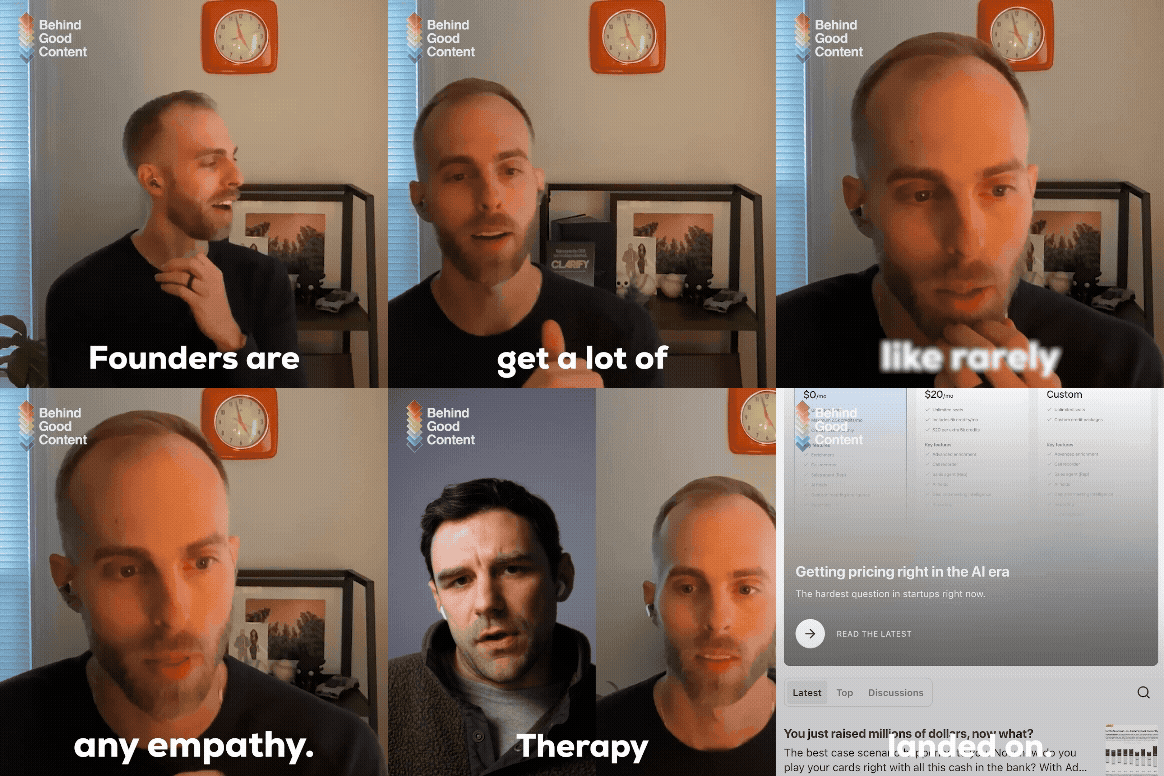
From there, our team worked through names and angles together with Clarify, and we ultimately landed on Founder Therapy.
The premise is straightforward. Founders get plenty of airtime around wins, but not a lot of space for the emotional side of building a company. Instead of prescribing best practices, Founder Therapy shares Patrick's honest perspective on the weight of running something, so other founders feel less alone when they hit the same walls.
It also maps directly to Clarify's buyer. Founders are the ICP. Patrick has credibility with them because he's in the same seat. When voice, audience, and product line up that cleanly, content can make an incredible impact.
The hard decisions
There were a few choices along the way that run counter to what a lot of teams do early. The Clarify team knew that if they were going to build their marketing around trust in the founder, they had to be careful in their approach.
Craft > anything else
Chris was clear about his number one priority: quality.
A two-person team can't produce thoughtful long-form content every week on top of all their other responsibilities. They wanted a partner to help a) create a newsletter vision and b) bring it to life.
"The quality of execution has been so good because you guys were involved in the beginning stages of the idea. There was never any of us having to do that dance of 'that's not exactly what we had in mind.'"
Skipping BS in favor of credibility
Chris was also direct about AI-generated content in this context. For a founder-led newsletter, trust is the whole game. If readers start to suspect the writing is machine-generated, credibility erodes quickly—and it's hard to get back.
"Even as the tools improve, you can still look at a paragraph of text and very quickly have your AI-bullshit meter go off."
Starting from zero subscribers
The tempting move when you launch a newsletter is to auto-subscribe your existing users and prospects. But if someone gets an email from a property they never signed up for, trust is damaged before you've had a chance to earn it.
Starting from zero also kept the early data clean. The first hundred subscribers' engagement told us exactly what's resonating, and that insight is paramount to building a sticky newsletter.
"Moving forward, if I ever start a property like this again, doing it the hard way is the right way to do it."
Early results
Two months in, the newsletter has several thousand views and 200+ subscribers, accompanied by some strong qualitative signals: founders referencing specific editions in conversations, leaders reaching out to contribute, and partnership opportunities emerging directly from the newsletter.
These sorts of signals don’t always show up immediately in attribution reports, but it’s clear to Chris, Patrick, and the Clarify team that Founder Therapy is working.
.jpg)
.jpg)
.jpg)
%20(1).gif)
.gif)
.gif)
%20(1).gif)

