#35 - Stephanie Bowker
Stephanie Bowker is the head of marketing at Metaview, an AI hiring platform that helps recruiting teams with interview notes, sourcing, application review, and more. Last quarter, she and her team made a series of polished commercial videos about the tension between recruiters and hiring managers, put them out across LinkedIn, LinkedIn Connected TV, and YouTube, and drove more than 15 million views and a 25% spike in direct and organic website traffic. In this episode, Stephanie tells us all about the process behind that work. We get into how she went looking for the real drama inside Metaview’s ICP, how she found the tension that recruiters already felt every day, and how her team tested that idea with scrappy lo-fi videos before putting real budget behind the bigger commercial spots. We also talk about what makes top-of-funnel content actually land, why LinkedIn Connected TV worked so well for this campaign, and where AI can help marketers move faster without replacing the human judgment that makes the work land.
.jpg)
Hey all,
This week I sat down with Stephanie Bowker, Head of Marketing at Metaview.
Last quarter, her team launched their first commercial video series, which drove more than 15 million views across LinkedIn Connected TV and YouTube, and a 25% spike in inbound traffic.
It all started with a quest for drama while lurking online communities, and a video shot on her iPhone.
When Stephanie Bowker joined Metaview as their marketing leader, she had one early objective: raise brand awareness during a major repositioning—from AI note-taker to full hiring platform.
Before she touched a script, a budget, or an agency, she asked a more important question: where's the drama?
Step 1: Go On a Drama Quest
She combed through customer call recordings, Reddit threads, LinkedIn comments, and conversations with members of their recruiting community. She was specifically hunting for their frustrations, shared struggles, the things that made them rant online at 11pm.
“Find some tension because people… go through a shared struggle.”
What kept surfacing was the same dynamic: the hiring manager and recruiter relationship. Funny, fraught, and universally relatable to anyone who's ever sat on either side of that table.
Step 2: Lo-fi Test Before You Spend
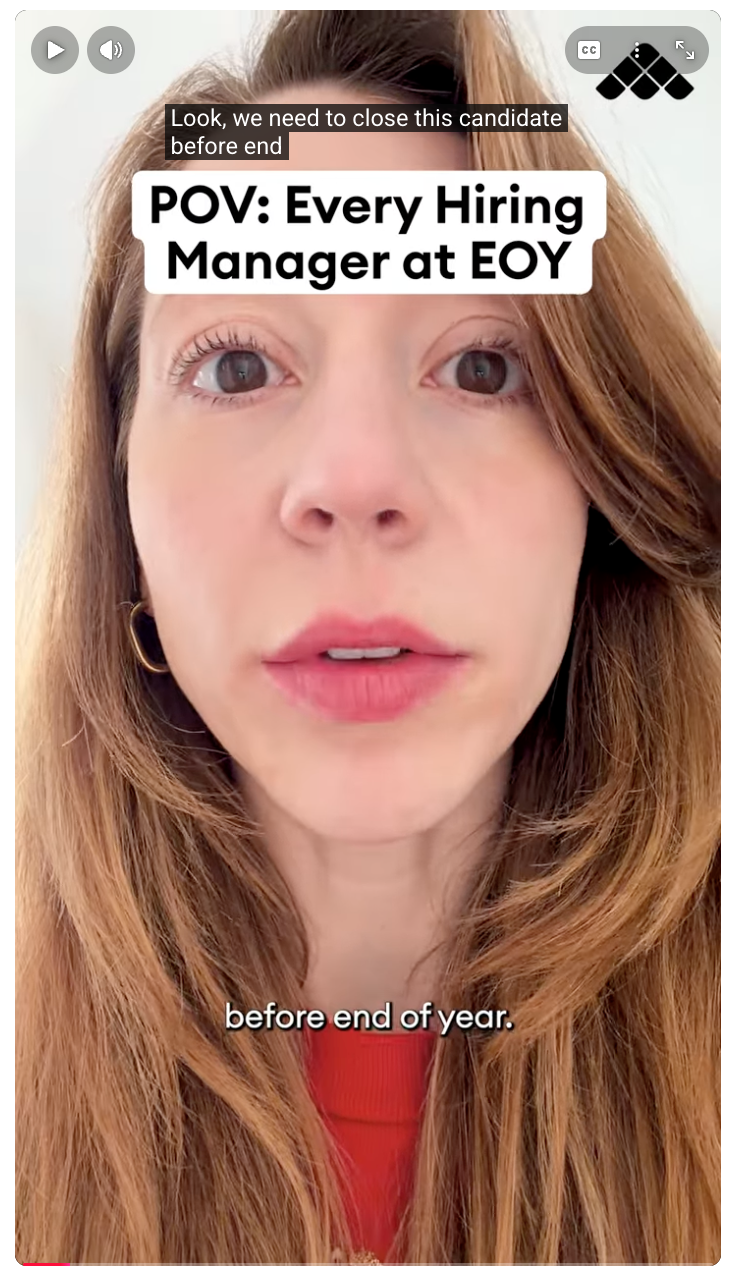
Once Steph had her narrative, she didn't go straight to production. She pulled together a couple marketers and filmed a few short videos over two days on their iPhones, edited them in CapCut, and shipped them organically to LinkedIn and YouTube Shorts. Her own video - where she played the role of the "evil hiring manager" - hit 100,000 views in its first week. It still haunts her algorithm today, and she says candidates mention it when they apply. This proved the narrative had real resonance before a single dollar of production budget was committed.
Step 3: Go Big Budget
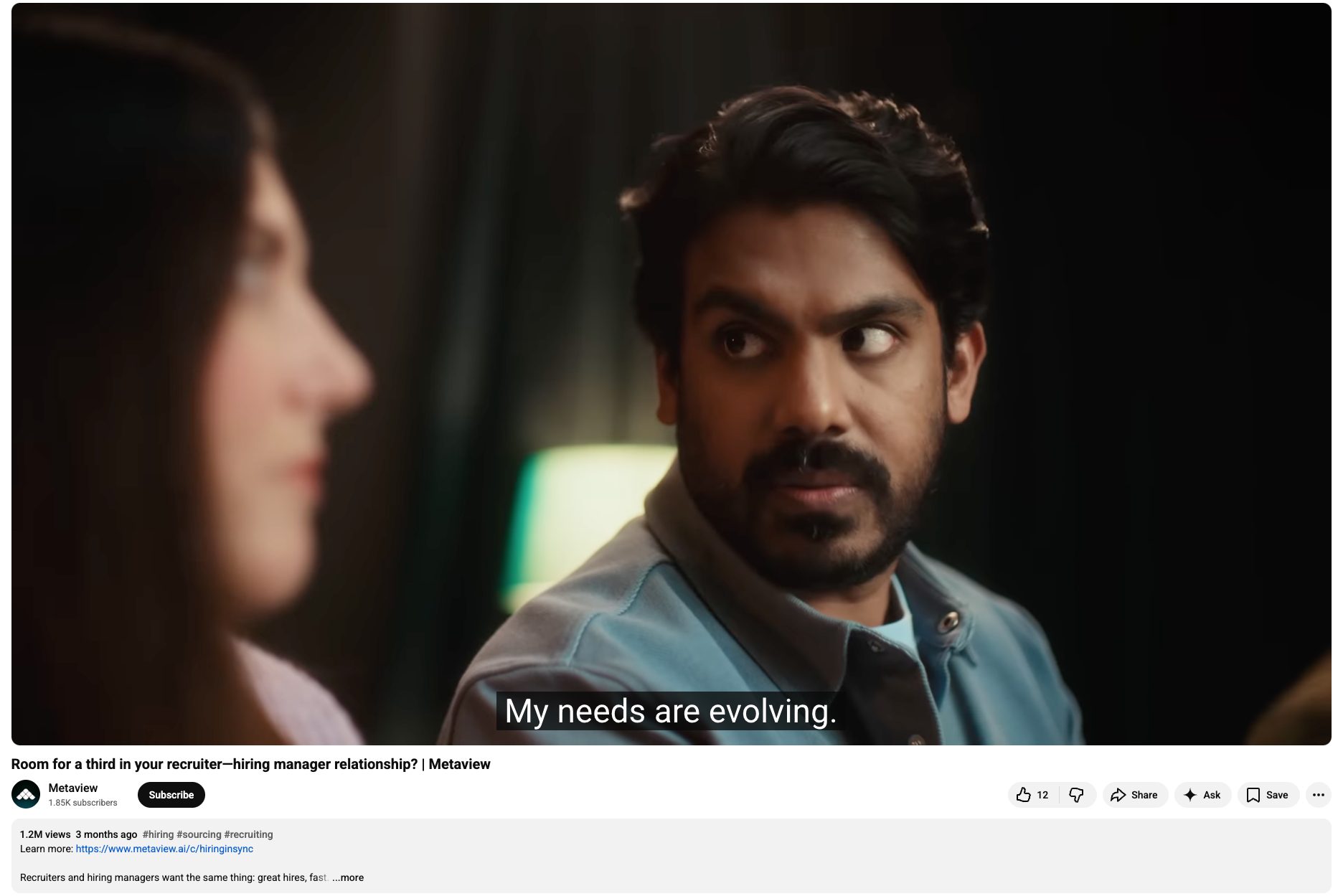
With conviction from the lo-fi tests, Steph greenlit a three-part professional video series. The total cost was $50k—which was on the lower end, because she came to the table with 90% of the script and a clear POV. Her advice is to be specific and evidence-backed with your briefs for your production partners.
The result was a slick, emotionally-driven series that leaned fully into the hiring manager-recruiter tension. It’s the kind of content that makes you laugh because it's too real.
Step 4: Distribution, Distribution, Distribution
Steph's distribution strategy was built to meet the audience where they already are.
LinkedIn was the obvious primary channel, as that's where recruiters live. LinkedIn Connected TV drove the best results, along with ads on streaming platforms like Hulu where a one-minute comedic video about workplace tension would resonate with people settling into the couch for the evening.
The results:
- 15 million+ views across the campaign
- 75%+ view rate, exceptional for short-form video content
- 25% spike in direct and organic traffic that quarter, significantly attributed to LinkedIn Connected TV
- Organic reaction videos from external influencers, perhaps the clearest sign they struck a cultural chord
The takeaway
Don’t start with the expensive shoot. Find the drama first. The drama is where the most relatable parts of the human experience live. Human conversations to uncover these stories still matter. AI can synthesize patterns across hundreds of data points at speed. But it can't sit across from someone and feel the weight of what they're actually frustrated by.Test and validate your idea. Gather the evidence, and then deploy a bigger budget.
.jpg)
.jpg)
.jpg)
%20(1).gif)
.gif)
.gif)
%20(1).gif)

